Posts

Showing posts with the label #teleradiology

MUSCULOSKELETAL (MSK) IMAGING

Musculoskeletal Disorder (MSD), includes diseases of muscles, bones, joints, and the soft tissues around it. Pain and injuries are the most common complaints of the patients reaching out to a primary care physician, and with increasing age, the risk of developing MSD increases. As per the data from the World Health Organization (WHO), disability from MSDs is second largest in number, across the globe. The symptoms of various MSDs vary and it may affect the daily activity so much so that the quality of life may get compromised. It’s very important to get muscle or bone disorders diagnosed and treated in time, to keep oneself healthy. This makes MSK, the most sought after system as far as, an accurate clinical diagnosis is concerned. Imaging Modalities Various modalities are used to reach an optimum conclusion , before starting a confirmed treatment in MSDs. These are X-Rays, ultrasound, CT scans, and magnetic resonance imaging (MRIs). Each modality offers its benefits and limit...
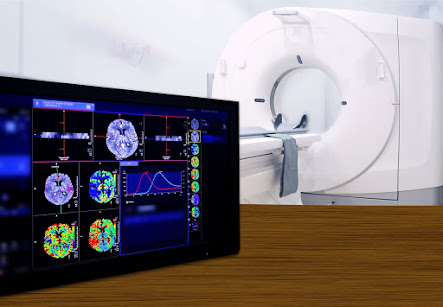
How Teleradiology Can Help Early Management Of Acute Stroke

Image
Dr. Shriram Varadharajan, Consultant Neuroradiologist (Neuroimaging & Stroke) Awareness of stroke and immediate arrival to the hospital plays a major role in its treatment and recovery. Unlike acute coronary syndrome (ACS – heart attack) where pain plays a prominent role in patients presenting early, stroke patients ignore the negative signs such as sudden onset weakness or numbness. Often minor stroke or TIA (transient ischemic attack) serves as a warning for subsequent major stroke (CVA – cerebrovascular accident). Stroke patients need to complete timely evaluation with various imaging tools. Treatment decisions in acute stroke require ultrafast imaging. It should be performed immediately after clinical triage and emergency stabilization of the patient. Imaging starts with the very basic question of differentiating Ischemic (clot in the vessels supplying the brain) from Hemorrhagic stroke (bleed) using a simple plain CT scan. Ischemic stroke patients may be given an injecti...

Quality In Teleradiology Reporting

Image
“ Quality is the extent to which the right procedure is done in the right way at the right time, and the correct interpretation is accurately and quickly communicated to the patient and referring physician .” Hillman et al Teleradiology   is playing a crucial role in delivering patient care with its prompt and quality service. The quality of radiological reporting depends on multiple parameters apart from the internal review and external feedback system like Communication between the reporting radiologists and referring physician for better understanding of the case PACS and workflow management Operational team (CTC) Access to reporting tele-radiologist for clarification / discussion The Internal Parameters   can be listed as – 1. Internal Quality Assurance Team sets up an auditing system involving methodology on random review of the reports and peer reviews at regular intervals. The key performance indicators (KPIs) are prepared by the team in alignment w...

Teleradiology Reporting Services: Do You Really Need It? This Article Will Help You

Image
The ever-evolving medical world keeps bringing out solutions to the challenges posed by the fast pace populace.   Radiology   is keeping pace with modernity and has very well integrated technology and telecommunication to formulate a remote mode of extending services –   Teleradiology . Today, Teleradiology has enabled the clinician in providing the best of patient care and saving lives and thus becoming an indispensable healthcare service. Teleradiology supports the clinicians/hospitals/healthcare service providers with many solutions, compensating the shortage of radiologists and reporting for all imaging modalities – X-Ray, Ultrasound scan, CT scan, MRI Scan, PET scan, Nuclear Medicine, Interventional imaging. 1.   Round-the-clock Reporting service   supports the healthcare service providers with   radiology services   round the clock for all days irrespective of no. of radiologists on-site or subspecialty reporting requirement. The defined rep...

Teleradiology India

  Cloudex  Radiology  provides Teleradiology Services worldwide in South Asia, India, Qatar, Saudi Arabia, United States, Morocco, Mexico, Kuwait, Kenya, Sri Lanka, Nepal, Italy, Bangladesh, UK, Singapore, Indonesia, United Arab Emirates, Libya, Malaysia, Philippines, Ghana, Ethiopia, Thailand, Newzealand, United States, Afghanistan, etc.

What is Body Imaging?

Image
Body Imaging is a subspecialty of diagnostic radiology which deals with imaging evaluation of organs in the thorax, abdomen, and pelvis. It includes all types of radiological examinations performed using conventional X- rays, CT scan, MRI, ultrasound, mammography, and PET (positron emission tomography). How does Body Imaging help? These radiological techniques prove helpful to all the clinicians, in receiving detailed information about a wider range of illnesses which can include pain in the acute abdomen to more serious conditions like cancers. Who is a Body Imaging Expert? A Radiologist , who has gone an extra mile in obtaining extensive training in Body Imaging Subspecialty, is a Body Imaging Expert. Reporting done by these   Fellowship Trained experts , help other practicing clinicians, having a more precise diagnosis providing a cutting-edge advantage in treating a variety of diseases in the chest, abdomen, and pelvic area. What do Body Imaging Services provide? ...

Teleradiology Reporting Services

Cloudex healthcare private limited Started in 2008 and incorporated as a limited company in 2012, Cloudex today is one of the industry leaders, by initiating pioneering efforts to establish teleradiology in India . and one of the award-winning startups from Kerala State. We provide the below services: 1. Teleradiology Reporting Services 2. P et CT Scan Reporting Services 3.  Radiology Artificial Intelligence Database We provide teleradiology services in the below country: Teleradiology Reporting Services in India Teleradiology Indonesia Teleradiology  Nigeria Teleradiology  Philippines Teleradiology  Ethiopia Teleradiology  New Zealand Teleradiology  Africa Teleradiology  Kenya Teleradiology  Tanzania Teleradiology  Sudan Teleradiology  Uganda Teleradiology  Chad Teleradiology  Mali Teleradiology  Ghana